Social Orgonomy Presentation Series
Princeton, NJ – January 1, 2010
How does mother/baby bonding affect relationships later in life? How does the capacity to love develop in humans? How does perinatal care influence society? Greek board-certified psychiatrist, Dr. Theodota Chasapi, will address these critical topics during her presentation, “The Roots of Love & Hate: From Conception to the First Days of Life,” as part of the ACO’s ongoing series of Social Orgonomy talks on Saturday, February 6th at the Paul Robeson Center for the Arts, 102 Witherspoon St., Princeton, NJ from 3:00PM to 5:00PM. Seating is limited and reservations are recommended. Refreshments will be served. Admission is $45 ($10 for students under age 25 with I.D.). Call (732) 821-1144 or make your reservation Online.
More information about Dr. Chasapi.
Press Kit: Adobe Acrobat or Microsft Word.

I’ve been writing this holiday fundraising letter to you for many years now and it occurred to me that in all these years of making contact with you, I’ve never focused on how the orgonomic understanding of contact is a simple principle with profound implications for our understanding of nature.
We can focus on contact with ourselves internally or outside ourselves in the broader social realm. Dr. Wilhelm Reich addressed problems in both of these realms from his very earliest days working in psychoanalysis. An individual’s capacity for genuine contact with himself was at the core of Reich’s therapeutic work. He made significant changes in psychoanalytic technique as he helped the patient relate to the therapist in a deeper and more truthful way. Reich became even more deeply involved in the social realm when he concluded that society itself was sick, prevention of neurosis was essential and social problems must be addressed with social programs rather than with individual psychoanalytic therapy. He was the first psychoanalyst, therefore, to take his theories out of the medical office to try to effect social change when he started a program to bring sexual education and advice as well as contraceptives to thousands of people, a revolutionary idea in 1929.
Read more…
Depression, compulsive behavior, ADHD, and a range of anxiety related problems face so many of us. While medical orgone therapy can relieve symptoms, its true aim is getting to the root cause of issues that rob so many lives of happiness. Modern psychiatry too often relies on psychopharmacology – where feelings are
classified as disease, given a name and subsequently treated with medication. Medical orgone therapy seeks to alleviate trauma and remove the emotional blocks from which stem all kinds of suffering -- working toward a real and lasting cure – while getting patients off all psychiatric medication where possible (or to the lowest possible dose necessary).
Read more…
The newborn is exposed to trauma from the moment of birth -- and we now know that these experiences are never forgotten, but rather they are locked in the armor. Reich's therapy with adults, and his interest in preventing disease, led him to focus on children, primarily the newborn. He believed that nothing was more important than understanding how the environment impacts infant children.
Read more…
Medical orgone therapy is a unique mind-body method of treating emotional illnesses, and it has also proven valuable in relieving certain physical conditions. The treatment incorporates a verbal aspect, character analysis, combined with a physical approach, one that facilitates the release of repressed emotions. Sadness and anger are two examples of emotions that can surface in the course of a session. Feelings that arise are allowed expression, and they are always under the control of the treating psychiatrist.
Read more…

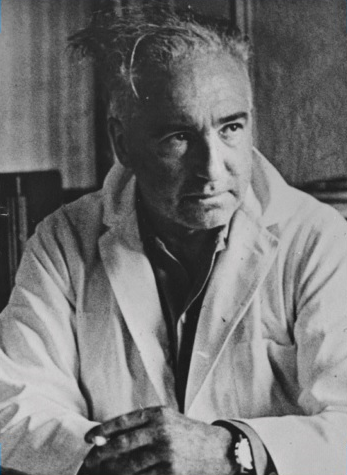
Wilhelm Reich (1897 - 1957) discovered a form of energy that he called "orgone” and asserted that this energy -- which has either been mystified through the ages or rejected outright by modern-day scientists -- could be found within all living things and even throughout the cosmos.
Reich entered the University of Vienna medical school in 1918 where he was drawn to the work of Sigmund Freud. He quickly became highly respected as a psychiatrist and psychoanalyst.
Also read Dr. Elsworth F. Baker's brief biography of Reich